


SPECIFICATIONS:
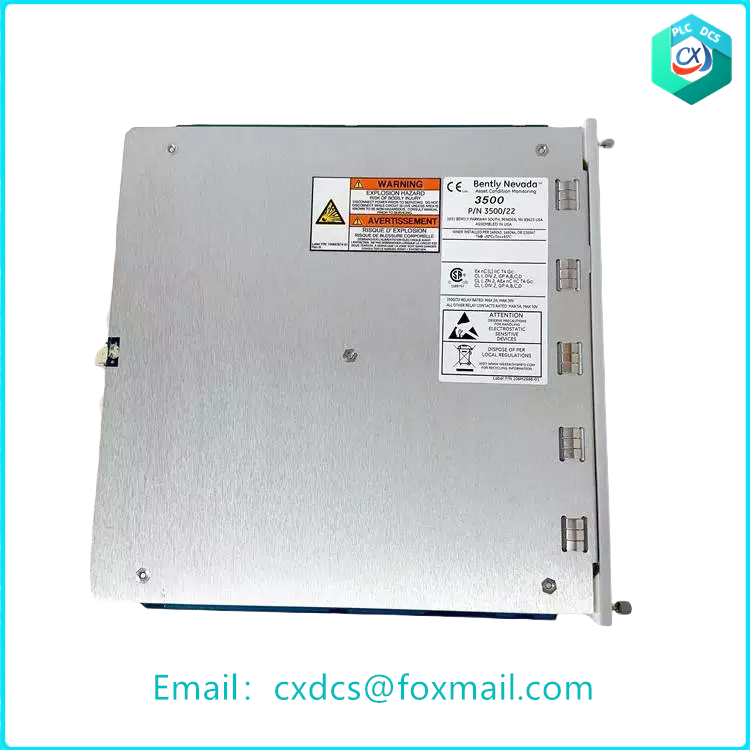
Part Number: 3500/22M
Manufacturer: Bently Nevada
Series: 3500
Input Signal: -10 Vdc to +10 Vdc
Power Consumption: 7.7 watts
Shaft Power Supply: -24 Vdc
Product Type: Transient Data Interface Module
Temperature: 25 degrees celsius
Transducer Power Supply: -24 Vdc
Weight 0.85 lbs
Dimensions 9.50 x 4.50 x 1.00
Availability: In Stock
Repair: 3-7 Day
Country of Origin: United States
FUNCTIONAL DESCRIPTION:
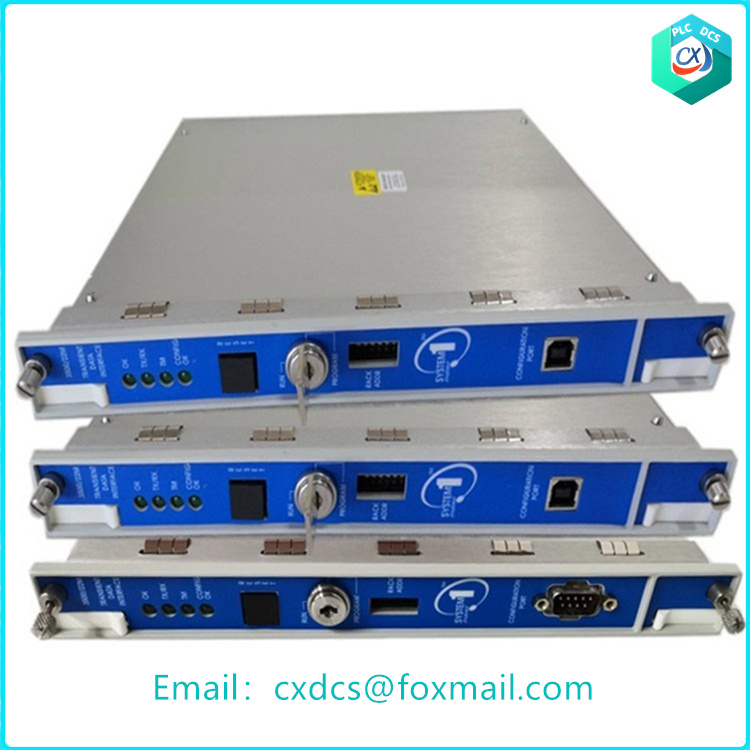
3500/22M is a Transient Data Interface Module manufactured and designed by Bently Nevada as part of the 3500 Series used for monitoring seismic activity. The 3500/22M Transient Data Interface (TDI) is the interface between the 3500 monitoring system and compatible software (System 1 Condition Monitoring and Diagnostic software and 3500 System Configuration software). The TDI combines the function of a 3500/20 Rack Interface Module (RIM) with the data collection capability of a communication processor such as TDXnet.
FEATURES:
- In a 3500 rack, the TDI is located in the slot next to the power supplies. In order to continually gather steady-state and transient dynamic (waveform) data and transmit this data through an Ethernet link to the host software, it interacts with M series monitors (3500/40M, 3500/42M, etc.).
- The TDI comes with conventional static data-collecting capabilities. However, the TDI may also record dynamic, high-resolution transient data with the use of an optional Channel Enabling Disk.
- The 3500 rack houses the TDI’s communication processing function. Although the TDI performs some tasks that are shared by the entire rack, it is not a crucial component of the monitoring system and has no bearing on how well the system as a whole monitors the autonomous machinery protection.
- The link between the 3500 monitoring system and compatible software is called the 3500/22M Transient Data Interface (TDI) (System 1 Condition Monitoring and Diagnostic software and 3500 System Configuration software). The TDI combines the 3500/20 Rack Interface Module (RIMfunctionality ) with a communication processor, like TDXnet, to collect data.
- In a 3500 rack, the TDI is located in the slot next to the power supplies. In order to continually gather steady state and transient dynamic (waveform) data and transmit this data through an Ethernet link to the host software, it interacts with M series monitors (3500/40M, 3500/42M, etc.). The TDI comes with conventional static data-collecting capabilities. However, the TDI may also record dynamic, high-resolution transient data with the use of an optional Channel Enabling Disk.
- The 3500 rack houses the TDI’s communication processing function. Although the TDI performs some tasks that are shared by the entire rack, it is not a crucial component of the monitoring system and has no bearing on how well the system as a whole monitors the autonomous machinery protection.
- It is utilized to switch the 3500 rack between “RUN” and “PROGRAM” modes. RUN mode keeps out configuration modifications while allowing the rack to operate normally. The rack can be configured locally or remotely while still operating normally in PROGRAM mode.
- The switch can stay in either the RUN or PROGRAM position by removing the key from the rack in either position. You can prevent unwanted rack reconfiguration by locking the switch in the RUN position. Anytime a rack needs to be remotely reconfigured, the switch can be locked in the PROGRAM position.
- Application scenarios:
Power industry: Condition monitoring of key equipment such as steam turbines, generators, and fans.
Petrochemical industry: Vibration and displacement monitoring of rotating machinery such as compressors, pumps, and expanders.
Steel and metallurgy industry: Fault prediction and protection for equipment such as rolling mills, fans, and gearboxes.
Aerospace industry: Condition assessment of high-precision equipment such as engines and turbines. 

There are no reviews yet.