


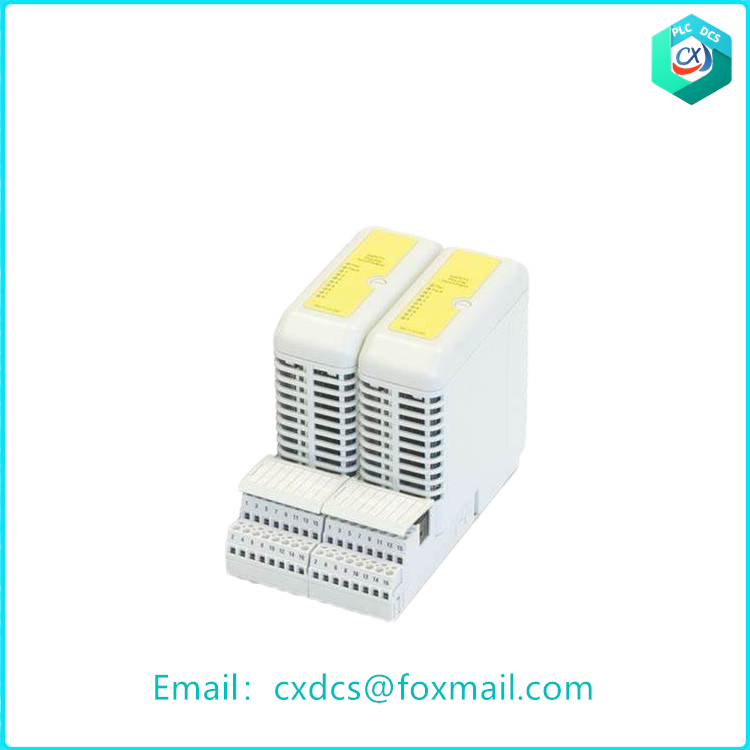
8102-HO-IP is an 8-channel analog output module launched by GE (General Electric). It is a key component in the field of industrial automation and is mainly used to convert digital signals into analog signals for output to drive field devices (such as valves, actuators, etc.). The following is a detailed analysis of this module:
I. Core Functions
Multi-channel output: It offers 8 independent analog output channels, each of which can be independently configured for output range and precision. It supports standard industrial signals such as 4-20mA and 0-10V, meeting the driving requirements of different devices.
High precision and stability: Advanced DAC (digital-to-Analog Conversion) technology and high-precision circuit design are adopted to ensure the accuracy and long-term stability of the output signal. The typical accuracy can reach ± 0.1%FS (full scale), and the temperature drift is controlled at an extremely low level.
Isolation design: Electrical isolation functions are provided between channels and between channels and the system, effectively preventing signal interference and ground loop issues, and enhancing the system’s anti-interference capability.
Flexible configuration: Supports the configuration of parameters such as output range and alarm threshold through software or hardware, is compatible with multiple industrial protocols (such as HART, FOUNDATION Fieldbus, etc.), and is convenient for integration into existing control systems.
2. Technical Specifications
Number of output channels: 8 channels.
Output signal type: Supports standard industrial signals such as 4-20mA and 0-10V.
Accuracy: ±0.1% FS (typical value).
Isolation voltage: The isolation voltage between channels and between channels and the system is ≥1500V AC (effective value).
Environmental adaptability: The operating temperature range is typically from -20℃ to +70℃, meeting the harsh environmental requirements of industrial sites.
Iii. Application Scenarios
Process control: In industries such as chemical engineering, petroleum, and natural gas, it is used to precisely control parameters such as valve opening and flow rate.
Electric power automation: It drives the actuators in power equipment to achieve remote monitoring and automatic regulation.
Water treatment and environmental protection: In water treatment plants, sewage treatment plants and other places, control the operating parameters of equipment such as pumps and fans.
Manufacturing industry: In automated production lines, it is used to control key parameters such as motor speed and pressure.
3. Advantages and Characteristics
High reliability: Industrial-grade components and strict production processes are adopted to ensure the long-term stable operation of the module in harsh environments.
Easy to integrate: Supports multiple communication protocols and interface standards, facilitating seamless integration with control systems such as PLC and DCS.



There are no reviews yet.