

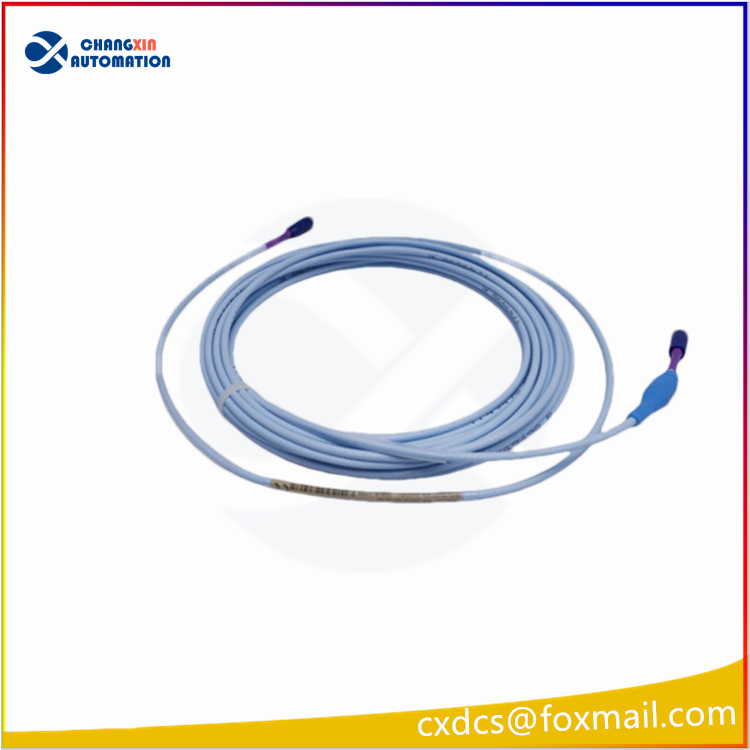

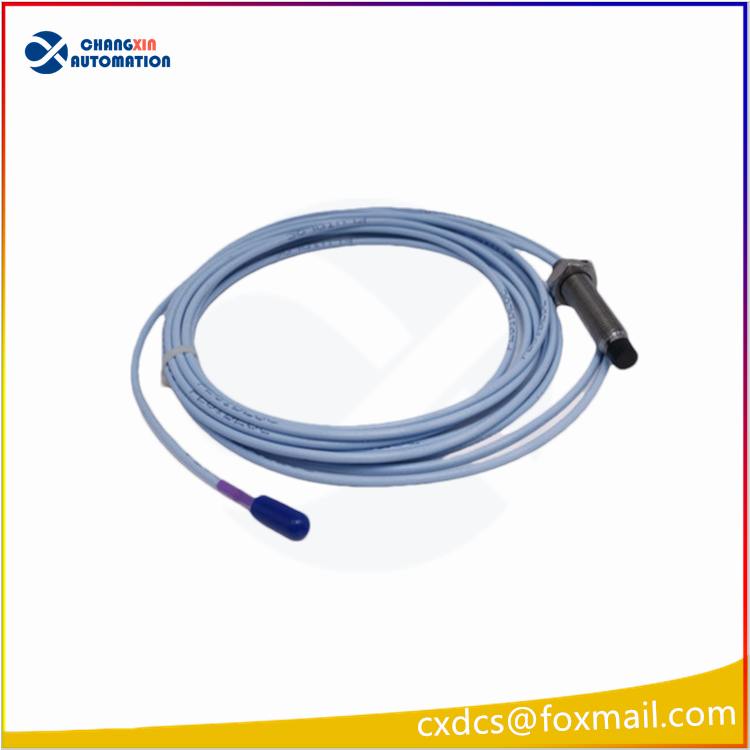
Bently Nevada 21000-16-10-00-120-04-02 Proximity Probe Housing Assemblies – Summary of Key Information
I. Product Basic Information
Model and Classification
21000-16-10-00-120-04-02 belongs to the 21000 series proximity probe housing assembly of Bently Nevada. It adopts a full-metal design and is suitable for external installation of proximity probes (Proximity Probe). This series together with the 24701 stainless steel series constitutes the standard housing product line of Bently Nevada. Core function
Protective probe: Provides physical protection for the eddy current probe to prevent mechanical damage or environmental corrosion.
Explosion-proof certification: Certified by CSA (Canadian Standards Association), suitable for hazardous areas (such as explosive gas environments), supporting intrinsically safe applications.
Compatibility: Fully complies with API 670 standards (American Petroleum Institute), applicable to rotating machinery monitoring in industries such as oil, chemical, and power.
Technical Specifications and Structure
Component Composition
Hood: Screw-in design, sealing the probe with the external environment.
Threaded Ports: For catheter connection, facilitating wiring.
Probe Sleeve: Optional length, customized according to the installation location, ensuring that the probe wire length exceeds the sleeve.
O-ring: Provides sealing, preventing liquid or gas leakage.
Reverse Installation Probe: Supports reverse installation, suitable for different monitoring requirements.
Optional Accessories: Catheter Accessories, Insulation Adapters, Probe Stands (e.g., P/N 37948-01).
Environmental Adaptability
Temperature Range: The probe operates within a temperature range of -51°C to +177°C (-60°F to +351°F), suitable for extreme environments.
Explosion-proof Rating: CSA Type 4 certification, ensuring safe use in hazardous areas.
Installation Requirements
Catheter Support: If the catheter length exceeds 304 millimeters (12 inches), additional support is required to reduce vibration.
Probe Wire: Must be longer than the catheter to avoid stretching or breaking.
Application scenario
Rotating machinery monitoring
Vibration monitoring: Measuring shaft vibration through eddy current probes to prevent mechanical failures.
Displacement monitoring: Monitoring axial displacement to prevent rotor from colliding with the stator.
Phase measurement: Synchronously collecting vibration signals and rotational speed signals for fault diagnosis.
Industry coverage
Oil and gas: Monitoring of key equipment such as compressors, turbines, and pumps.
Chemical and power: Assessment of the operating conditions of steam turbines, generators, and fans.
Steel and paper: Vibration analysis of high-load equipment such as rolling mills and dryers.

There are no reviews yet.