

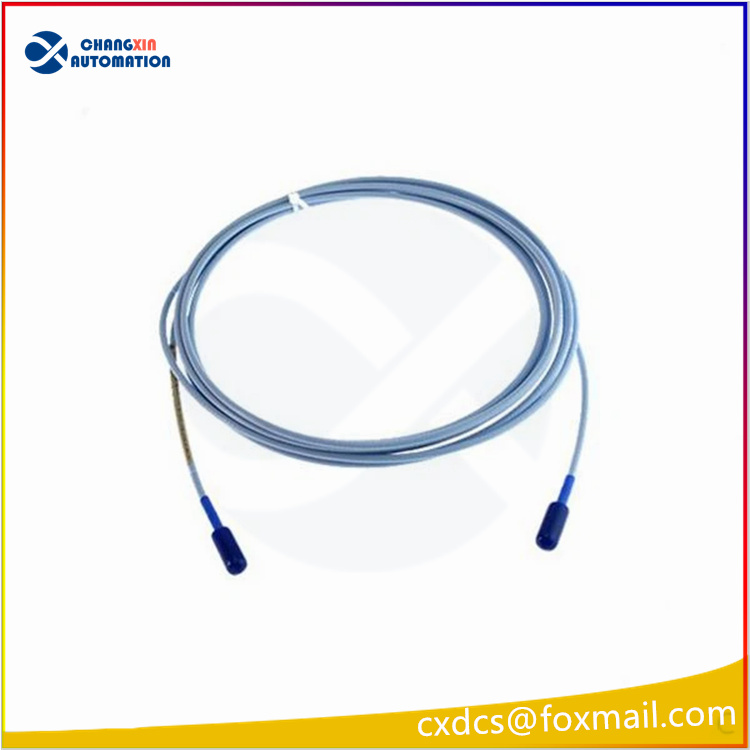

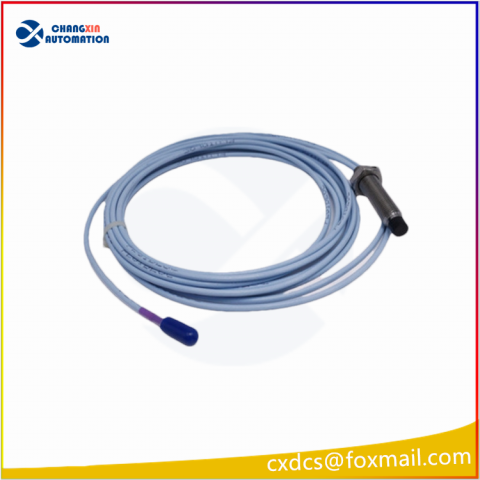
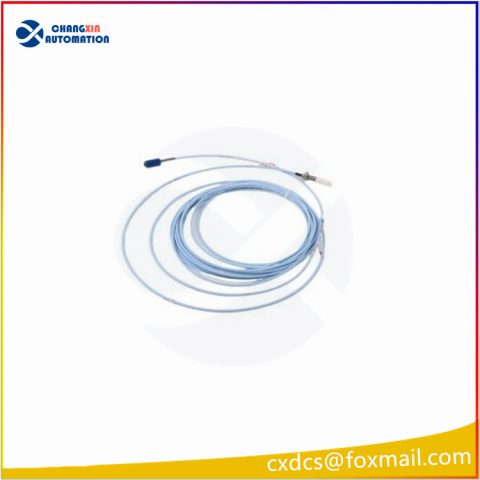
Part of it, the following is a detailed introduction to this probe:
I. Core Working Principle
The Bently Nevada 330904-08-15-10-02-05 proximity probe operates based on the principle of eddy current effect. The probe contains a coil inside. When high-frequency alternating current from the preamplifier is connected, the coil will generate a high-frequency alternating magnetic field at its front end. When this magnetic field approaches a conductive object (usually the surface of the measured equipment’s shaft), it will induce an alternating current flowing in a vortex-like pattern on the shaft surface, which is called “eddy current”. These induced eddy currents also generate a new magnetic field in the opposite direction to the original magnetic field, thereby weakening the original magnetic field of the probe coil. The change in magnetic field strength will cause a change in the equivalent inductance and impedance of the probe coil, and this change is inversely proportional to the distance between the probe end face and the shaft surface. The preamplifier can precisely detect this change in coil impedance and perform demodulation, amplification, and linearization processing, ultimately converting it into a direct current voltage signal proportional to the gap distance. This signal is transmitted to the monitoring system and displayed in real time as the vibration value or position value of the shaft.
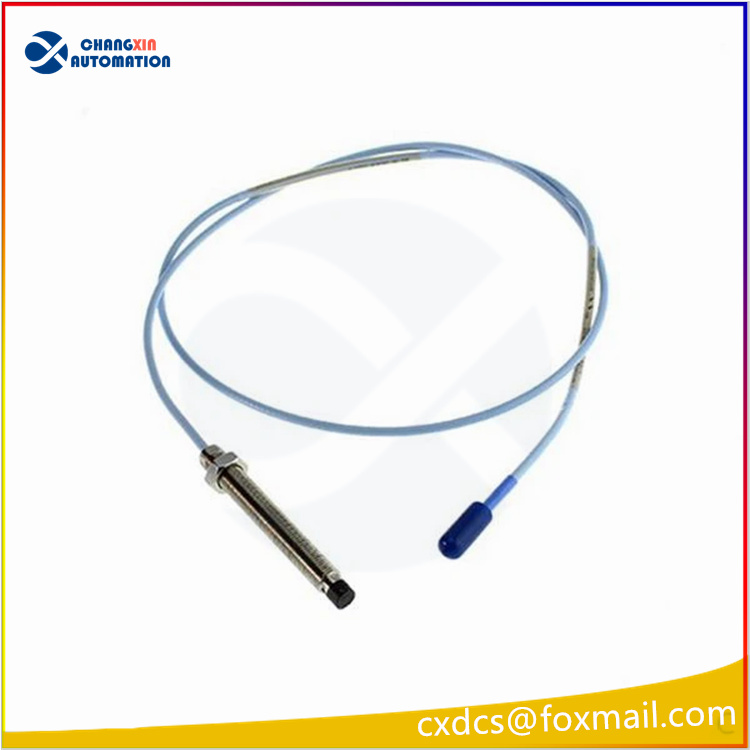
Technical Specifications and Characteristics
Sensitivity: The standard value is 200 mV/mil (7.87 V/mm), ensuring compatibility with Bently preamplifiers and monitoring systems.
Linear Range: Typically around 80 mils (2 mm), within this range the output signal maintains a high degree of linearity with distance.
Frequency Response: 0 to 10 kHz, capable of accurately capturing the axis trajectory of low-speed rotors and the impact signals of high-speed rolling bearings.
Operating Temperature: Depending on the model, the operating temperature range may vary, but generally it can meet the requirements of industrial sites. For example, some probe models may be able to operate stably within a temperature range of -50°C to +120°C.
Protection Grade: The probe usually has a high protection grade, such as IP67, which can effectively resist the influence of oil, dust, and moisture in harsh environments.
Cable Length and Connectors: The cable length and connector type may vary by model. Users need to choose the appropriate cable length and connector type based on the wiring distance and connection convenience at the site.
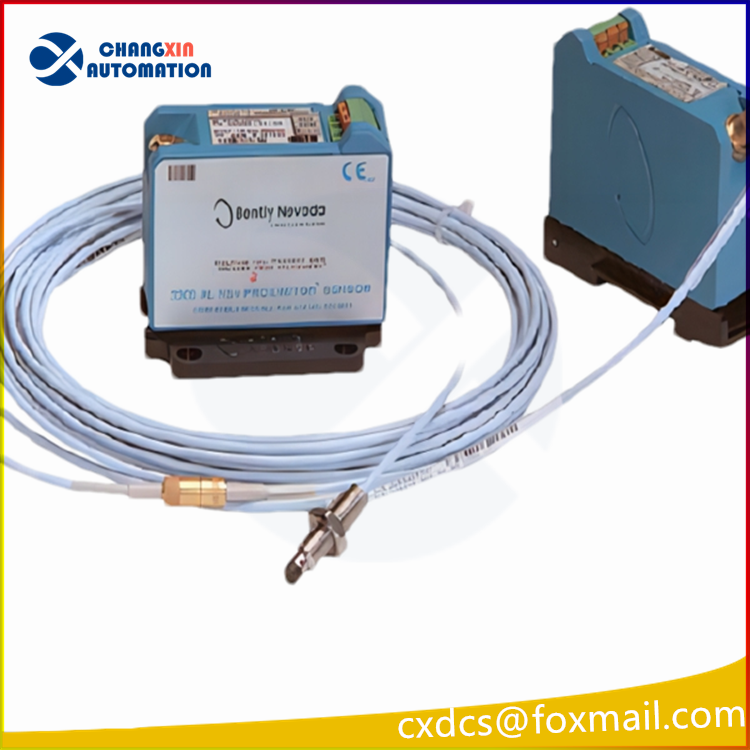
Installation and Commissioning
Pre-installation inspection: Ensure that the unit has been shut down and perform a complete safety locking procedure. Use a multimeter to measure the resistance of the probe coil, which should be within the specified range. Check for any damage to the probe end face and the cable.
Installation steps: Connect the probe to the preamplifier through the extension cable and power on the preamplifier. Install the probe into the probe mounting hole, but do not fix it yet, allowing its end face to slowly approach the surface of the measured shaft. Use a high-precision multimeter to measure the output voltage of the preamplifier at the output terminal, and slowly adjust the gap between the probe and the shaft until the output voltage stabilizes at the preset value (such as -10 VDC). Once the preset gap voltage is reached, lock the locking nut of the probe to ensure it does not loosen in a vibrating environment.
Cabling and Fixation: Arrange the wiring properly, fix the probe cable and extension cable in the cable clamp or conduit, away from hot surfaces and rotating components, to avoid mechanical damage. Ensure the cable connectors are clean, dry, and securely connected.
Commissioning and Verification: After installation, gently tap the probe mounting base and observe that the gap voltage displayed by the monitoring system should have a transient change, which proves that the entire measurement circuit is unobstructed. During the startup of the unit, observe the trend of vibration values and gap voltages to ensure that the data is normal and reasonable.
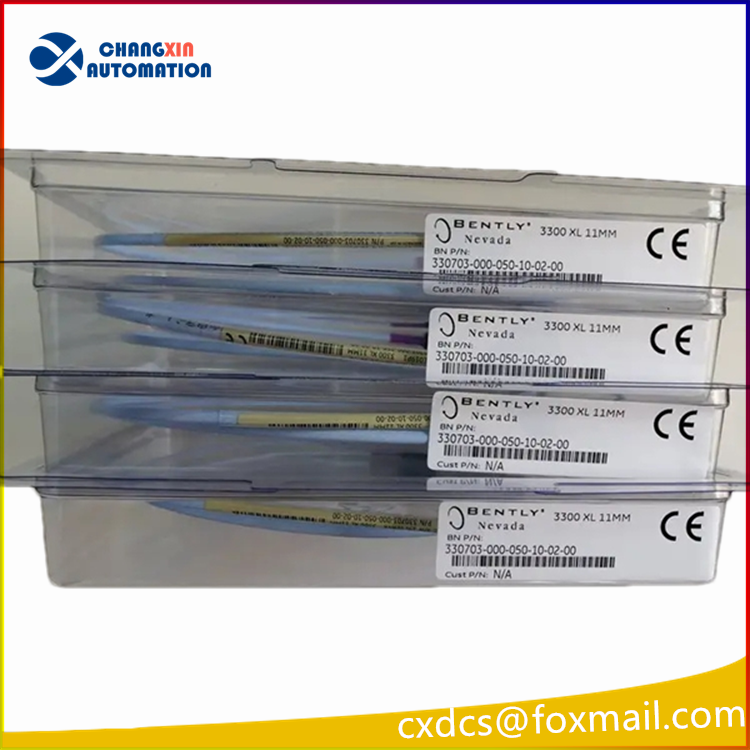
Application scenario
The Bently Nevada 330104-01-09-10-11-05 proximity probe is widely used in the protection and monitoring systems of the following high-demand rotating machinery:
Steam turbine generator set: Real-time monitoring of the radial vibration of the shaft at each bearing of the steam turbine and generator is the core barrier for preventing friction between moving and stationary parts and maintaining balanced quality.
Gas turbine: Monitoring the vibration status of the high-speed rotor to ensure safety during rapid start-up and load changes.
Large compressors/blowers: Monitoring the vibration of the compressor shaft to prevent damage to the equipment caused by conditions such as surge.
Water pump set: Used for vibration monitoring of large feed pumps and circulating pumps.
Other rotating machinery: Such as vibration monitoring and fault diagnosis for equipment like rolling mills, fans, centrifuges, etc.
There are more inventory models available.:
| BENTLY 128229-01 | GE IS215VCMIH2CA | YOKOGAWA AIP578 |
| ICS TRIPLEX T8480C | Honeywell 05704-A-0144 | ABB CI854A-eA 3BSE030221R2 |
| PACIFIC SCIENTIFIC PC3406AI-001-E | Honeywell 05701-A-0502 | PACIFIC SCIENTIFIC 33VM52-000-29 |
| A-B 700-PKT/B | Honeywell 05701-A-0361 | TEWS TPMC815-50 |
| ABB CI532V05 3BSE007297R1 | Honeywell 05704-A-0145 | ENTERASYS SSA-T8028-0652 |
| ABB 5SHY5055L0002 3BHE019719R0101 GVC736BE101 | TRICONEX 4351B | GE IS215UCVEM09A VMIVME-017614-132 350-017614-132 D |
| B&R X20CP1486 | ABB VBX01BA | MOTOROLA MVME2434 |
| ICS TRIPLEX T8110B | ABB VBX01TA | PROSOFT PLX32-EIP-SIE |
| EATON 8922-RB-IS | FOXBORO P0926PA | B&R 5AP920.1505-01 |
| ICS TRIPLEX T8461 | ABB DDC779BE02 3BHE006805R0002 | KOLLMORGEN S20330-SRS |
| KOLLMORGEN CB06561 PRD-B040SSlz-62 | FOXBORO FBM233 P0926GX | YOKOGAWA AIP171 4个 |
| BENTLY 133396-01 | HP E1406A | GE IS200AEPCH1BAA |
| GE SR469-P5-HI-A1-E | HP E1740A | GE IS210AEBIH3BEC |
| BENTLY 136483-01 | B&R 3IF661.9 | GE IS210BPPBH2BMD |

There are no reviews yet.