

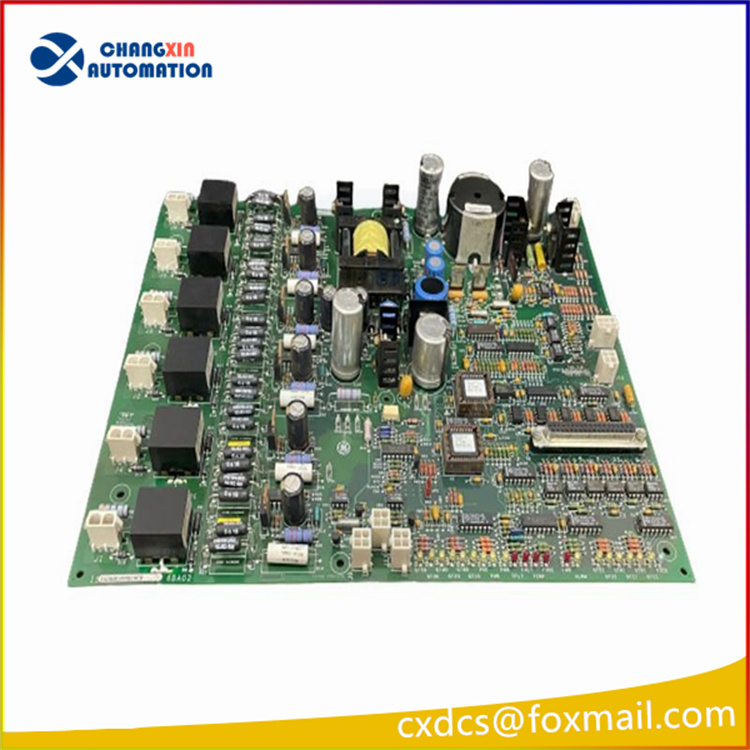
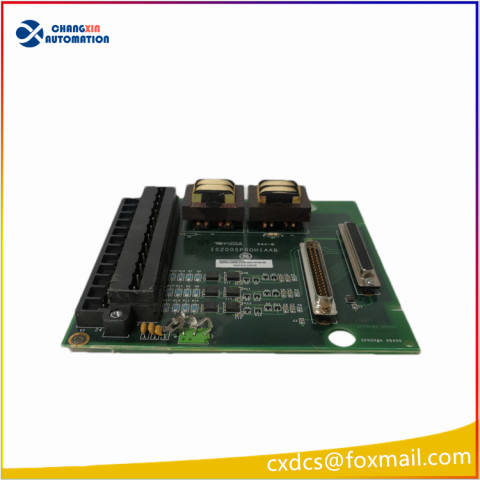
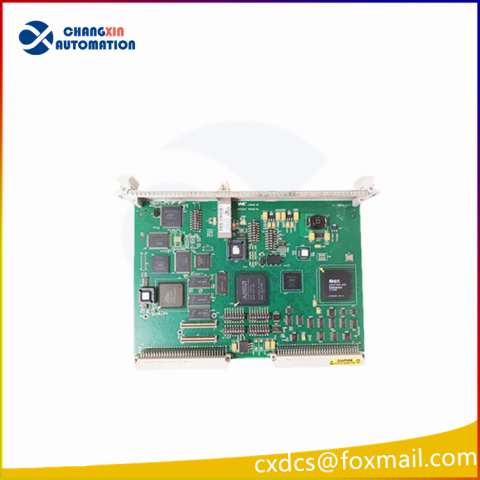
The IS200PMCIH1ACC control card plays a crucial role in the distributed control system (DCS). Its core function is to achieve digital signal interaction, support redundant configuration, and ensure system reliability through high-speed communication interfaces. It is suitable for industrial scenarios such as power and petrochemicals that have strict requirements for control accuracy and stability. The following analysis is conducted from three dimensions: technical characteristics, system adaptability, and application scenarios.
I. Technical Characteristics: Balance between High Reliability and Flexibility
Digital Signal Interactivity
As a digital input/output module, IS200PMCIH1ACC supports real-time digital signal interaction with external devices such as sensors, actuators, and relays. Its high sampling rate (the specific value is not disclosed, but GE’s similar modules typically reach millisecond level) can meet the requirements for high-frequency data acquisition, such as real-time monitoring of parameters like rotational speed and temperature in gas turbine control.
Redundancy Configuration Support
This module is compatible with single redundancy, dual redundancy, and triple redundancy systems. It works in coordination with the main controller through the IONet communication protocol. The redundant design ensures that when a single module fails, the backup module can seamlessly switch over, avoiding system downtime, and is suitable for safety-critical scenarios such as refineries and nuclear power plants.
Real-time Monitoring and Response
The module has built-in real-time status tracking functionality, which can monitor changes in external device states (such as valve opening/closing, motor start/stop) and respond quickly. For example, in the control of a chemical reaction vessel, if the temperature sensor signal is abnormal, the module can immediately trigger an alarm and联动 the cooling system.
System Adaptability: Deep Integration with DCS Architecture
Distributed Control Architecture Compatibility
IS200PMCIH1ACC belongs to the GE Mark VIe series of DCS components and follows the principle of “distributed control, centralized management”. In the hierarchical system, this module is located in the process control layer and directly interacts with on-site equipment. Data is uploaded to the production monitoring layer via Ethernet or IONet and is ultimately unifiedly scheduled by the centralized management layer (such as HMI).
Communication Protocols and Interfaces
The module is equipped with Ethernet ports and supports standard protocols such as PROFIBUS and LAN, enabling seamless connection with equipment from other manufacturers (such as Siemens S7 series PLCs). Its universal interface design simplifies system expansion, for example, in the control of blast furnaces in steel mills, it can simultaneously connect pressure sensors, flow meters, and electric valves.
Software Configuration Flexibility
Through GE’s ControlST software, users can customize control logic (such as PID parameters, interlock conditions) and I/O mapping relationships. For example, in the speed control of hydropower stations, engineers can adjust the module’s output frequency through the software to achieve precise regulation of the unit’s rotational speed.


There are no reviews yet.