
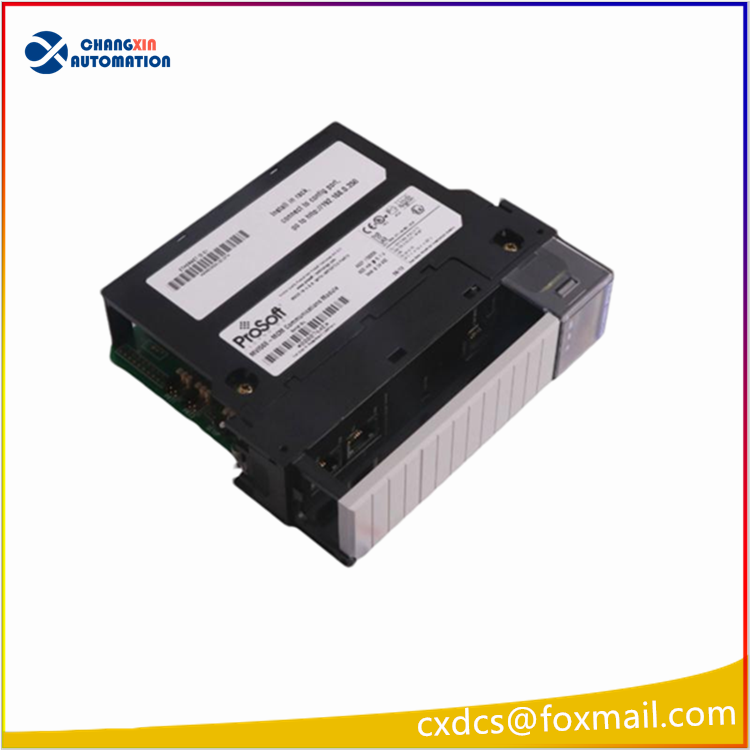

Detailed introduction of PROSOFT MVI56E-MCM Modbus Master/Slave Enhanced Communication Module: Overview
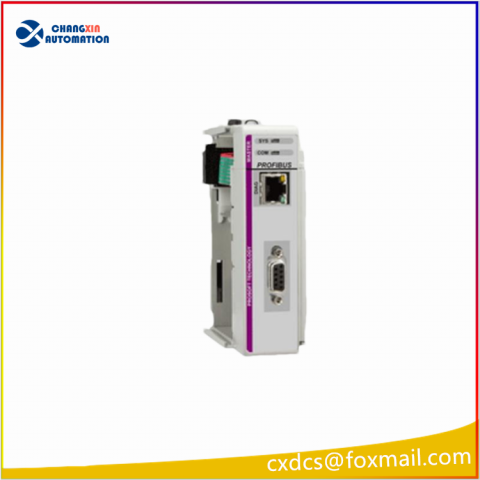
PROSOFT MVI56E-MCM is a communication module produced by ProSoft Technology. It is mainly used in the field of industrial automation to achieve seamless connection between Rockwell Automation’s ControlLogix processor and devices that use Modbus RTU/ASCII serial communication protocol.
Features and Advantages
Compatibility: Backward compatible with MVI56 series modules, allowing direct replacement without the need to modify the existing controller program, protecting the user’s initial investment and reducing upgrade costs.
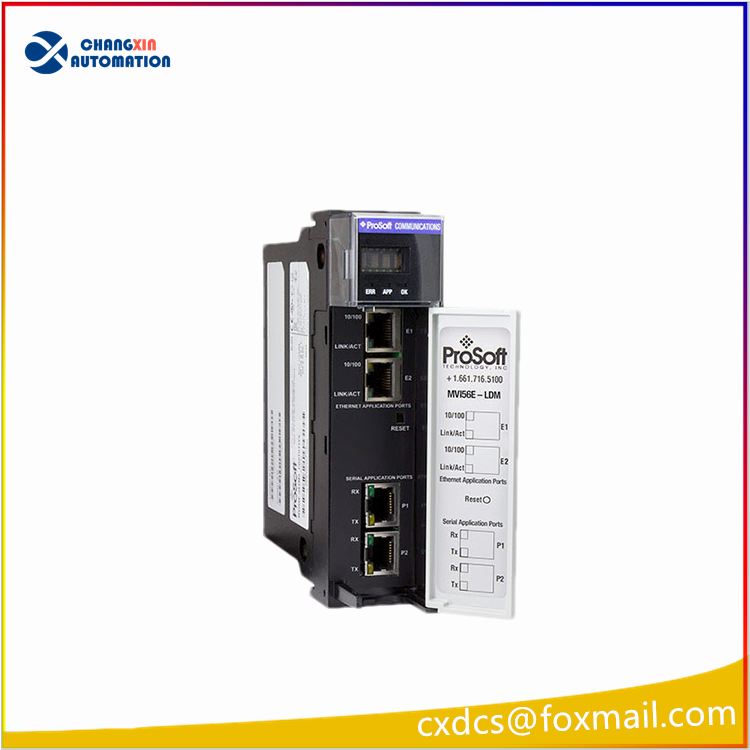
Easy Configuration: With ProSoft Discovery Service, initial IP address configuration can be easily performed; equipped with Ethernet configuration ports, no need to use a super terminal, configuration can be done via Ethernet port or CIP Connect®.
Strong Data Processing Capability: With a 10,000-word database, it allows for the collection of more data from the device, thereby improving operational performance and providing richer data support for the optimization and monitoring of industrial systems.
Easy Integration: Additional instructions (AOI) are provided for RSLogix 5000 version 16 or higher, reducing development time and costs. Module configuration is stored in the RSLogix™5000 project (CD file), without the need for additional programming or configuration software.
Remote Diagnostic Function: With software tools, remote configuration and testing can be performed. Utilizing ControlLogix’s backplane bridging function, module configuration can be achieved through the 1756 Ethernet/IP module, and all module configuration files can be stored in the CF card, which is helpful for disaster recovery plans.
Clear Status Display: 4-character scrolling alphanumeric LED display, displaying status and diagnostic data in simple and understandable English, facilitating operators to quickly understand the module’s operation status.
Application Areas
Industrial Automation: Used in factory automation systems, communicating with various sensors, actuators and controllers to monitor, control and optimize production lines, improving production efficiency and quality.
Data Collection and Monitoring: Real-time collection of various equipment data and transmission to the monitoring system, enabling operators to monitor equipment status, perform fault diagnosis and predictive maintenance, detect and solve potential problems in advance, and reduce downtime.
Remote Monitoring and Control: Supports remote access, allowing remote monitoring and control of equipment through network connections, enabling remote operation and maintenance, and facilitating engineers to manage and adjust equipment from different locations.
System Integration: In industrial environments, it can achieve data integration and communication between different brands and types of equipment, building a unified control system, improving the coordination and compatibility of the entire industrial system.

There are no reviews yet.