
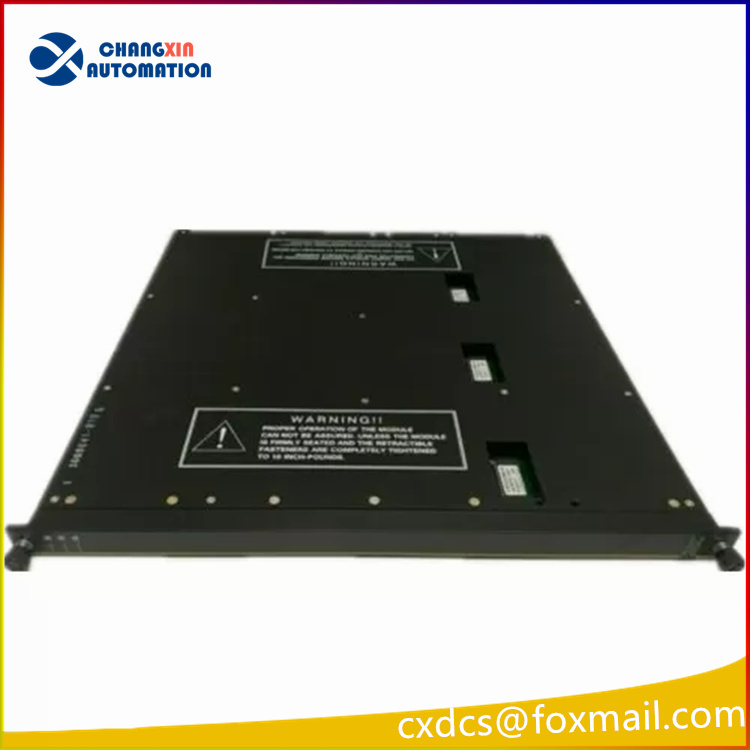

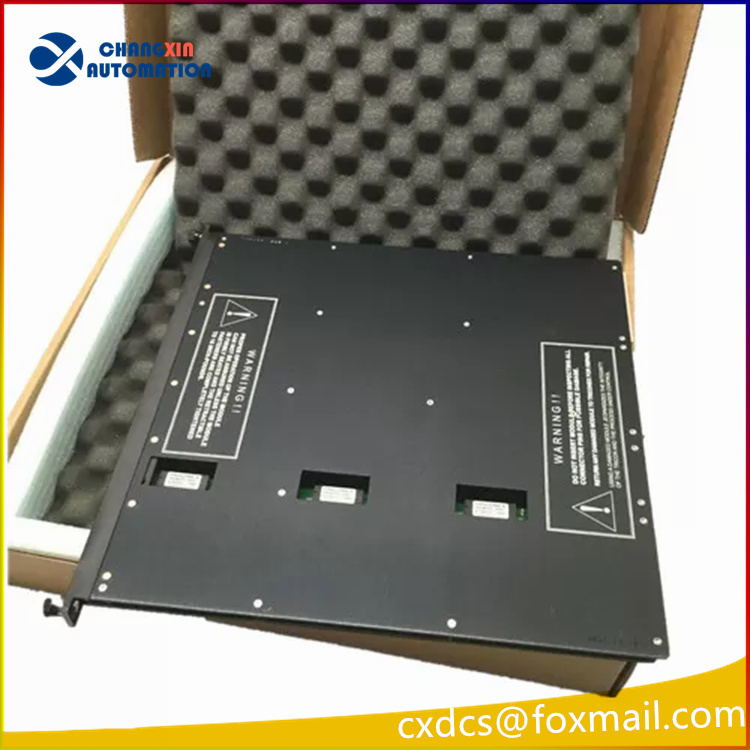
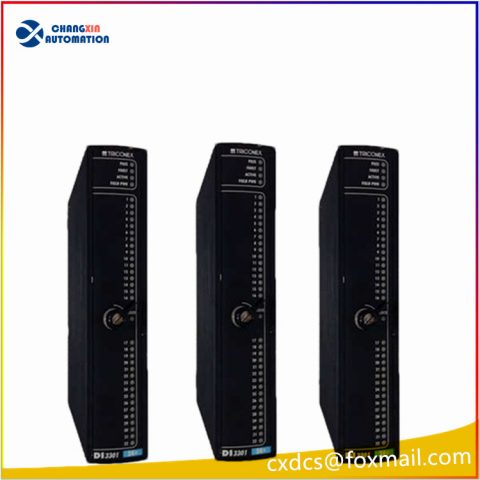
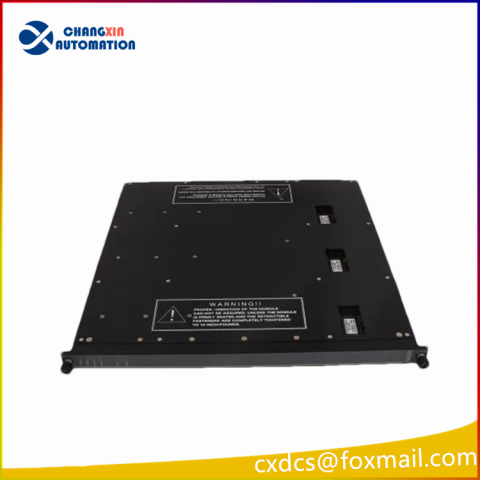
The TRICONEX 3700 is a key component in the TRICONEX safety system, specifically designed for process control applications. Here is a detailed introduction to it:
I. Core Functions
Redundant Design
The module integrates two independent channels, enabling seamless switching between primary and backup, ensuring continuous system operation even in the event of a single channel failure.
Three-module redundancy (TMR) architecture is adopted, with three independent channels enhancing security through a voting mechanism, meeting SIL3 safety level (IEC 61508) and TÜV certification requirements.
High Reliability
Adapted to harsh industrial environments such as high temperatures, high humidity, and vibration, verified through strict quality control and testing.
Fault Safety (Fail-Safe) Design: Any single-point failure will not cause system misoperation, ensuring the safety of critical processes.
Flexible Configuration
Supports various input/output signal types (such as analog and digital), allowing flexible configuration of channel functions based on specific requirements.
Compatible with multiple communication protocols, facilitating integration with other automation devices.
Real-time Performance
Possesses rapid response capabilities, enabling real-time monitoring and control of industrial processes, ensuring high-performance system operation.
The input card microprocessor can filter signals and diagnose hardware faults, while the output card provides voting information and checks feedback data.
Self-Diagnosis and Maintenance
Inbuilt advanced fault detection function, real-time monitoring of module status, providing fault alarms and detailed information, supporting online diagnosis.
Supports hot swapping, allowing for on-the-fly module replacement, reducing downtime and lowering maintenance costs.
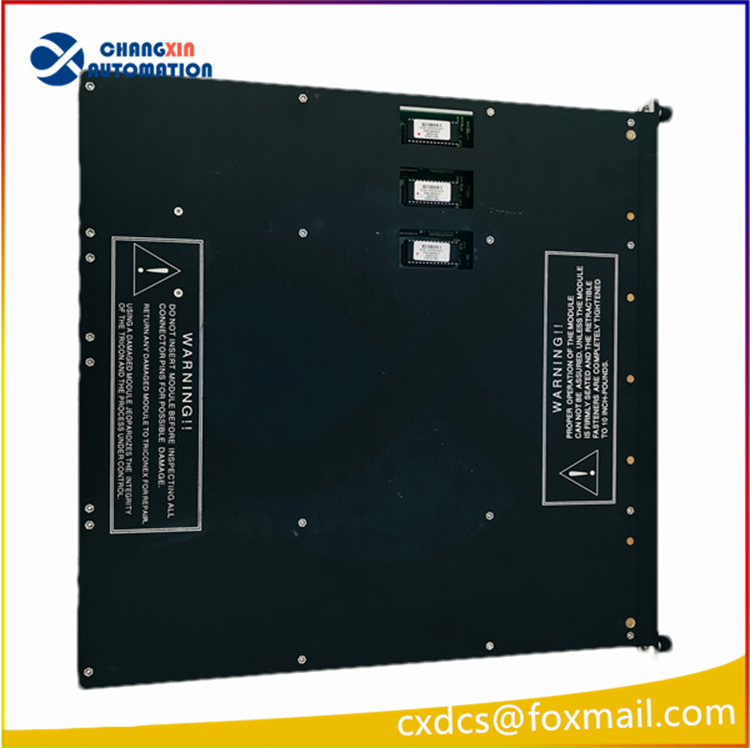
Technical Specifications
Channel count: 4 channels (some models support higher channel density).
Input type: Supports analog signals (such as voltage, current) and digital signals (such as switch signals).
Output type: Form C relay contacts (normally open/normally closed/common terminal), supporting 2 A resistive load.
Electrical lifespan: 100,000 operations (under rated load), mechanical lifespan up to 20×10⁶ times.
Isolation voltage: 1500 VAC (between contacts and between contacts and the frame).
Operating temperature: Standard model: -10°C to 70°C, wide temperature model: -40°C to +85°C.
Protection level: IP20 (standard), some models up to IP30.
Installation method: 35mm DIN rail installation or rack slot installation.
Communication interface: Supports industrial protocols such as Ethernet, Profibus DP.
Application scenario
Petroleum and Chemical Industry
Monitor key equipment such as compressors, pumps, reactors, etc., to achieve emergency shutdown (ESD) and safety instrument functions (SIS).
For example: In refineries, redundant design is used to ensure the safe operation of catalytic cracking units.
Electric power industry
Applied to the control of gas turbines and steam turbines, ensuring the high availability of power generation equipment.
For example: In nuclear power plants, SIL3 certified modules are used to monitor the reactor cooling system.
Natural gas processing
Monitor parameters such as pipeline pressure and flow rate to prevent leakage and explosion risks.
For example: In liquefied natural gas (LNG) plants, redundant control of compressor units is achieved.
Metallurgy and mining
Protect large machinery such as blast furnaces and rolling mills, reducing unplanned downtime.
For example: In steel mills, a rapid response function is used to avoid breakage accidents in continuous casting machines.
Offshore platforms
Adapt to harsh marine environments, monitoring the status of drilling equipment and power systems.
For example: In deep-sea drilling platforms, wide-temperature model modules ensure reliability under extreme temperatures.

There are no reviews yet.