

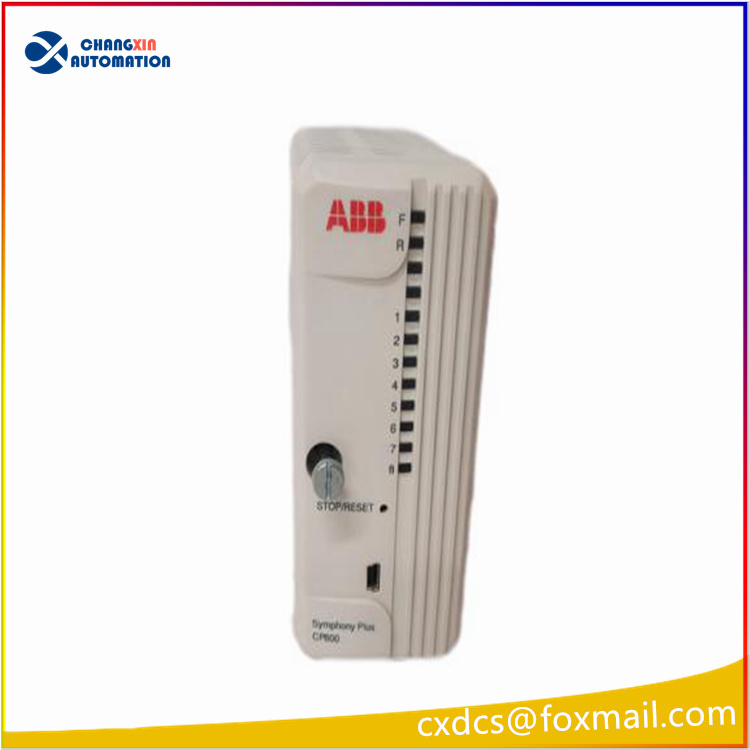
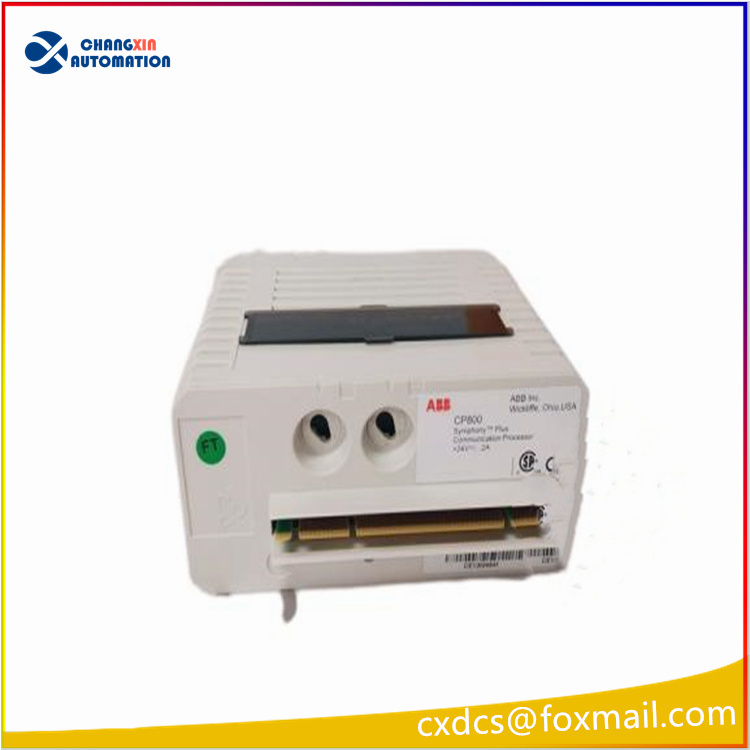
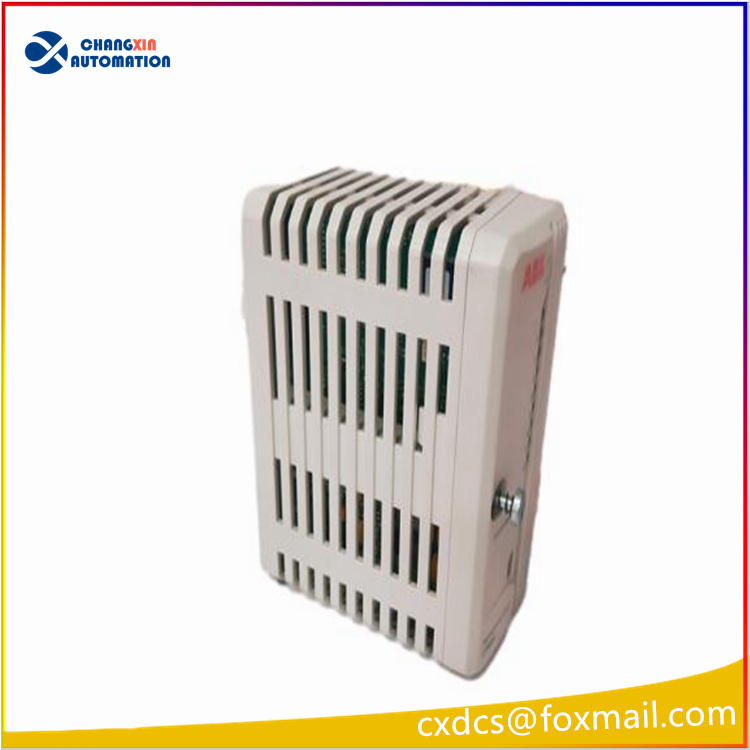
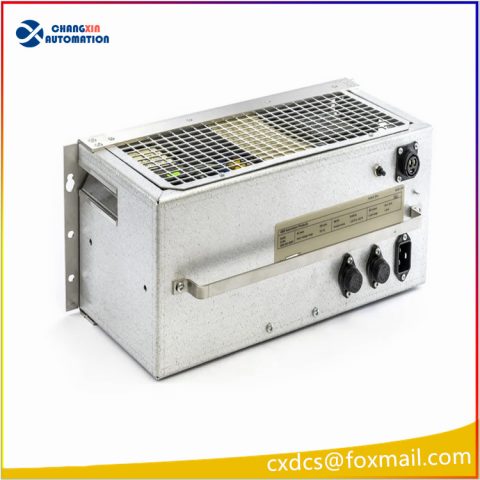
ABB CP800 is a high-performance industrial controller, widely used in the field of industrial automation. Here is a detailed introduction about ABB CP800:
Main features
High precision control:
Utilizing advanced control algorithms and high-speed processors, it can achieve high-precision motion control.
Suitable for scenarios requiring precise control of machinery and drivers, ensuring the accuracy and stability of the motion trajectory.
High performance:
Possessing excellent processing capabilities and real-time response speed, it can meet the demands of high-speed, heavy-load and high-precision motion control.
It can handle multiple motion axes and complex motion trajectories simultaneously, achieving efficient automated production.
Modular design:
Supports various configuration methods, allowing for flexible configuration according to different application requirements.
Provides rich functions and interfaces, facilitating connection and communication with other devices and systems.
Easy programming and integration:
Supports multiple programming languages and development environments, such as ABB’s RobotStudio and RobotWare software packages.
Provides a friendly user interface and programming tools, facilitating programming and debugging by users, enabling rapid system integration and customization.
High reliability:
Uses high-quality electronic components and advanced production processes to ensure the stability and reliability of the controller.
Suitable for harsh industrial environments, capable of stable operation for long periods.
Functional characteristics
Rich functions:
Provides position control, speed control, torque control, electronic cams, and other functions.
Supports various motion control protocols and bus standards, such as EtherCAT, Profinet, and SERCOS, etc.
Multiple communication interfaces:
Provides Ethernet, serial ports, USB, etc. as multiple communication interfaces, facilitating connection and communication with other devices and systems.
Supports multiple communication protocols to achieve networking and integration of the control system.
Fault diagnosis function:
Can detect and diagnose faults in the system and provide alarms or feedback for maintenance.
Reduces maintenance costs, improves system availability and reliability.
Application fields
Mechanical manufacturing:
Used for controlling and monitoring various mechanical devices to ensure their accuracy and efficiency in the production process.
Automated production lines:
Control industrial robots, automatic assembly lines, CNC machines, etc., to achieve efficient automated production.
Logistics and transportation:
Control transportation systems, such as automated storage systems, conveyor belts, and automatic guided vehicles.
Food and pharmaceutical production:
Control and coordinate food and pharmaceutical equipment in the production line to ensure efficient and quality production.
Energy production:
Control equipment related to energy production, such as wind turbines and solar tracking systems.
Scientific research and aerospace:
Used for controlling experimental equipment and scientific instruments in laboratories and research centers.
For controlling motion systems of aircraft, satellites, etc.
Advantages
High Precision:
It can achieve positioning accuracy at the micrometer level, meeting the requirements for high-precision control.
High Speed:
It can realize high-speed motion control, enhancing production efficiency.
High Reliability:
It can operate stably for a long time in harsh industrial environments, reducing maintenance costs.
Easy to Use:
It provides a friendly user interface and programming tools, facilitating users’ programming and debugging.
Scalability:
It can be expanded as needed to meet the constantly changing application requirements.

There are no reviews yet.